Purchases through affiliate links with Counterflow Coffee Review may earn this site commission at no extra cost to the reader. Affiliate Funding Policy
Why spout geometry and temperature workflow make or break your morning brew.
If you are brewing coffee with a French press or a drip machine, a standard kettle works perfectly. But the moment you step into the world of pour-over coffee, a gooseneck kettle transitions from a stylish luxury to an absolute necessity.
According to the Podium Coffee Club Gooseneck Kettle Buyer's Guide, the long, slender, curved neck of these kettles does two critical jobs: it dampens internal water turbulence to deliver a thin, predictable stream (ideally between 2 and 5 grams of water per second), and it allows you to start and stop your pour instantly. Without this control, water rushes into the coffee bed in turbulent gulps, causing "channeling"—where water bypasses large sections of coffee grounds, leaving you with an uneven, bitter, or sour extraction.
In this guide, we break down the core differences between electric and manual kettles, detail what to look for before buying, and profile five distinct options matching different budgets and brewing environments.
The Core Decision: Electric vs. Stovetop
- Stovetop & Manual Kettles: Highly durable, budget-friendly, and simple. You heat them directly on a burner or pour pre-heated water into them. The trade-off is temperature precision; you must watch a thermometer or use the "boil-and-wait" method.
- Electric Variable-Temperature Kettles: The ultimate convenience. They heat water rapidly on a dedicated power base, let you select exact target temperatures (crucial for light vs. dark roasts), and hold that temperature steady while you prep your coffee.
Electric Gooseneck Kettles
For maximum convenience, rapid heating, and precise temperature holds, electric models are the gold standard for home baristas.
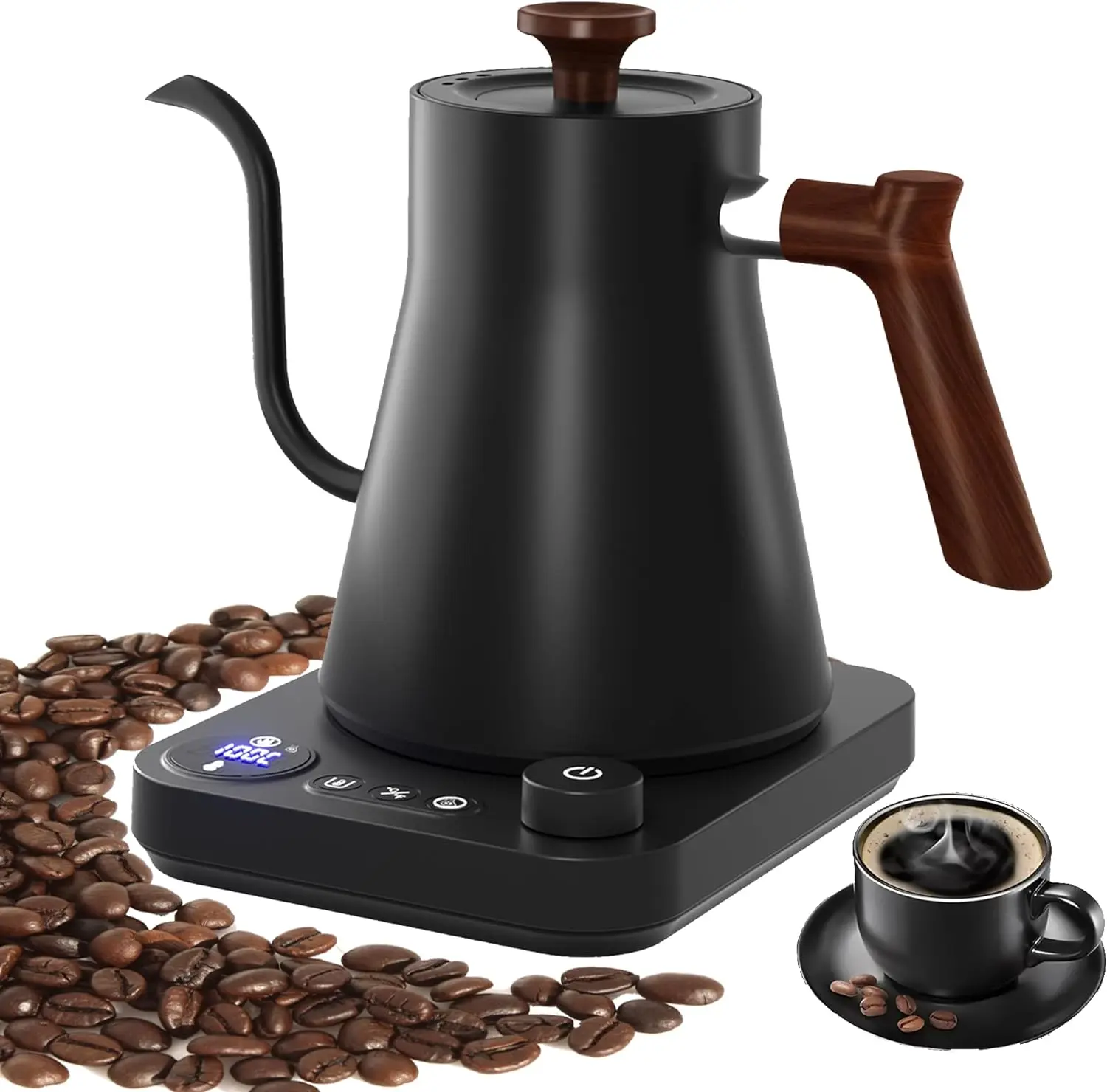
1. Smart Temperature Control Gooseneck Kettle (900ML)
This electric kettle features a sleek matte finish and a wood-grain styled handle. With a 900ml capacity, it is sized perfectly for brewing one to two cups of pour-over coffee. It offers smart temperature control, allowing you to dial in your target heat level for delicate teas or light-roast coffees.
2. 1000W Intelligent LED Gooseneck Kettle (1000ML)
Boasting a slightly larger 1-liter capacity and a 1000W heating element, this model is built from 304 stainless steel and features a modern, minimalist white aesthetic. The base includes an LED display for real-time temperature tracking, making it easy to monitor your water's thermal profile.

Stovetop & Manual Gooseneck Kettles
If you prefer a simpler workflow, have a tight budget, or already have a reliable way to boil water, these manual kettles offer excellent pour control without the cord.
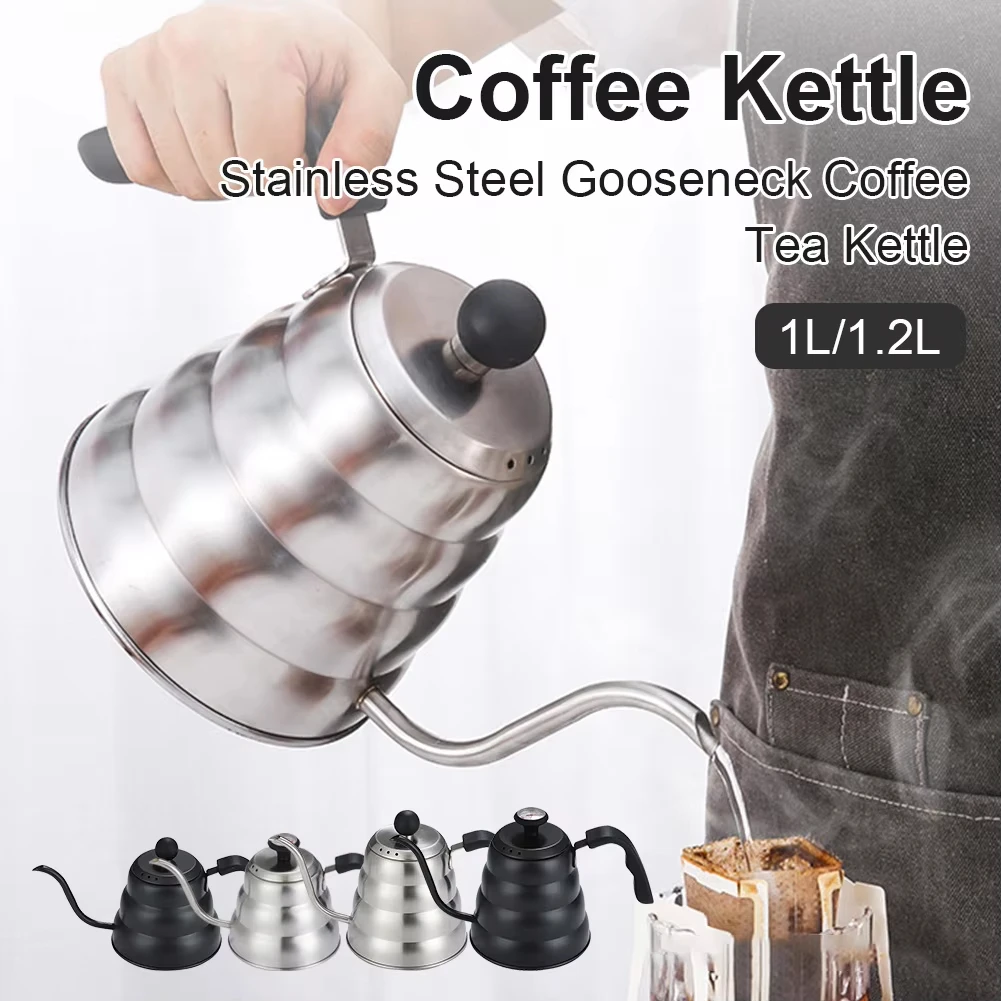
3. Classic Ribbed Drip Kettle with Thermometer (1L / 1.2L)
This traditional stovetop kettle features a classic ribbed stainless steel body and a built-in thermometer integrated directly into the lid. This allows you to monitor the water temperature in real-time as it heats on your stove, helping you hit the ideal 195°F to 205°F brewing range without guesswork.
4. Compact Stainless Steel Pour-Over Drip Pot (350ML / 600ML)
This ultra-compact, handle-free or basic-handle drip pot is designed for single-cup brewing. Because of its small size, it is typically not meant for direct stovetop heating; instead, you boil water in a standard kettle and transfer it to this small pot to execute a highly controlled, precise pour.

Specialty & Outdoor Brewing
For those who refuse to compromise on coffee quality when camping or backpacking.
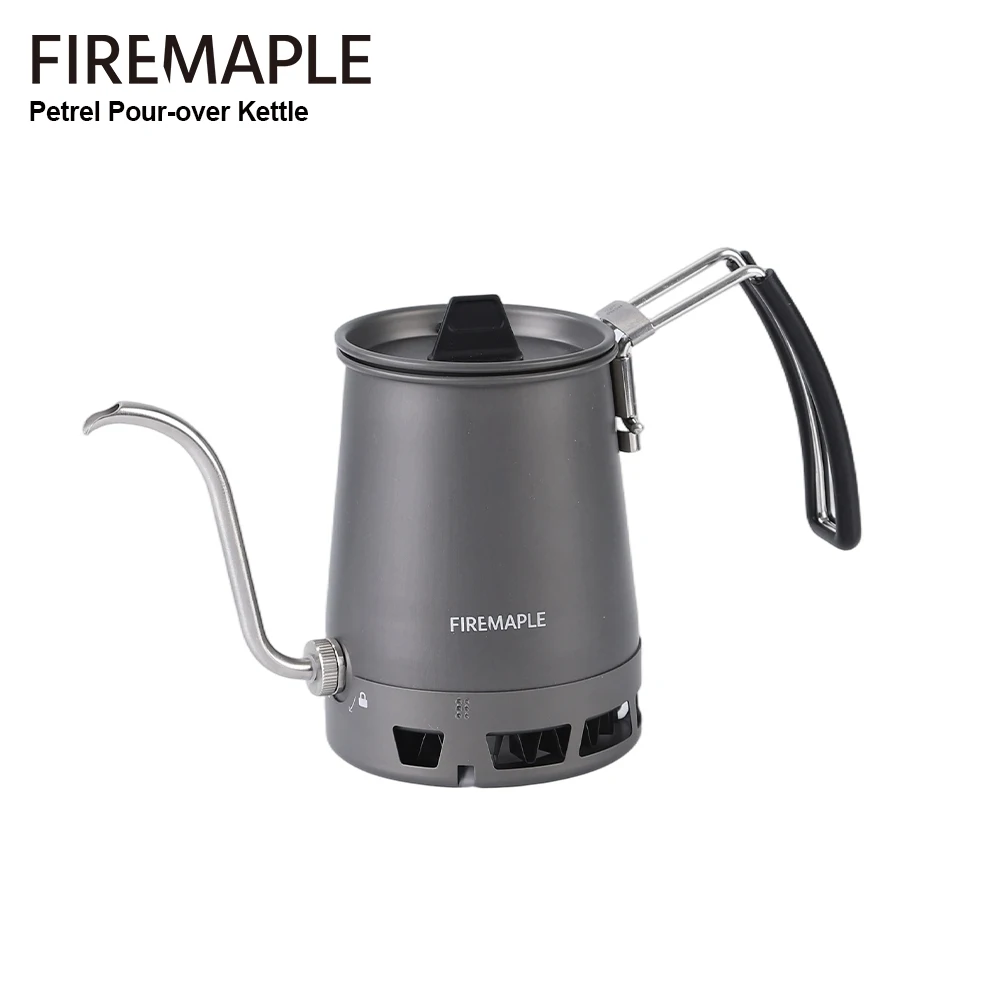
5. Fire-Maple Petrel Pour-Over Camping Kettle (350ML)
The Fire-Maple Petrel is a specialized outdoor tool. Built from hard-anodized aluminum and stainless steel, it features a detachable gooseneck spout and a folding handle to pack down incredibly small. It also utilizes an integrated heat-exchanger (HX) base designed to maximize fuel efficiency on camp stoves.
What to Look for: A Quick Buying Checklist
1. Spout Angle & Opening
Look for a tip that sits parallel to your counter when tilted. A narrow opening ensures a slow, steady stream, preventing accidental rushes of water.
2. Capacity vs. Weight
A 1-liter kettle is versatile but can feel heavy when full. If you only ever brew a single 12oz cup, a 600ml or 900ml kettle will be lighter and easier to control.
3. Real-Time Temperature Feedback
Whether it is a digital display on an electric base or a physical analog dial on a stovetop lid, having immediate temperature feedback helps you repeat your favorite recipes consistently.
Disclaimer: This editorial guide is based on general coffee brewing principles and manufacturer-stated specifications. We have not performed independent laboratory testing on these specific models. Always consult the manufacturer's instruction manual for safety, electrical compatibility, and maintenance procedures.
Counterflow Coffee Review © 2026